
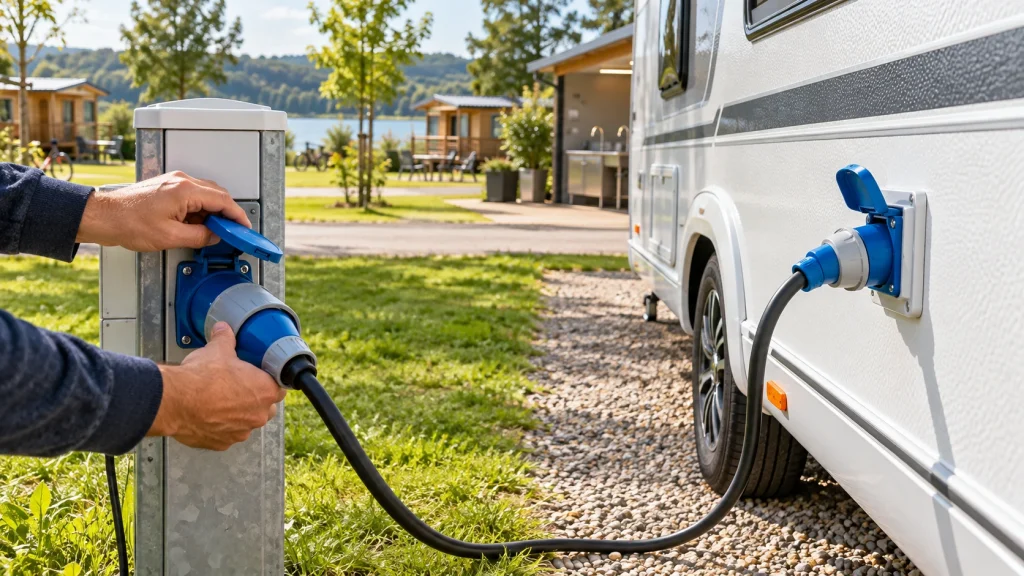
A caravan may have lights, a fridge, heating, and several devices needing power, but the connection between the pitch and the vehicle deserves as much attention as the appliances inside. CEE connections provide a purpose-built way to connect caravans to campsite electricity. Understanding how the plug, cable and pitch supply work together makes setup easier and helps you spot problems before you switch anything on.
What is a CEE connection?
A CEE connection is the familiar round, blue plug-and-socket arrangement commonly used for caravan hook-ups. Its shape helps the plug fit the matching socket securely. The parts are also made for the conditions a campsite connection may face, including outdoor use, though their condition and the way they are used still matter.
Typically, a hook-up cable runs from the campsite’s power point to an inlet on the caravan. The caravan’s electrical system then distributes power to its sockets and fitted equipment. A CEE plug does not make every appliance safe to use at once: the available supply at a pitch is limited, and the caravan’s own electrical installation must be in good order.
The connection also needs a continuous protective earth path. This gives electrical protection within the caravan a route to work as intended if a fault occurs. A damaged cable, loose fitting or unsuitable adapter can undermine that protection even when the lights appear to work normally.
Why the right cable matters
Choose a hook-up cable intended for caravan use, with the correct CEE connectors at both ends. Before travelling, check that it will reach the power point without tension. At the campsite described here, pitches have CEE connections and visitors are advised to bring a 20 m extension lead. That is a useful reminder to check a site’s guidance before packing; pitch layouts and distances vary.
Inspect the full cable before connecting it. Look for cuts, crushed sections, exposed conductors, damaged plugs and signs of overheating, such as discolouration or a burnt smell. Keep connectors clean and dry, and do not use a cable that shows damage. A quick inspection is especially worthwhile after a long journey, when equipment may have shifted in storage.
Lay the cable where people are unlikely to trip over it, and vehicles will not drive across it. Avoid sharp edges and places where water collects. If your lead is wound on a reel, follow the reel maker’s instructions about unwinding it before use. A tightly coiled cable carrying a substantial load can retain heat.
Connecting at the pitch
Start with the caravan’s electrical controls and the pitch supply switched off where switches are provided. Check that the plug, socket and cable are clean and undamaged. Connect the lead firmly at the caravan and the pitch, following any instructions displayed at the power point, then turn on the supply and the caravan’s controls as directed by their manuals.
This sequence gives you a chance to inspect the connection before it becomes live. It also reduces the chance of trying to insert or remove a plug while equipment is drawing power. When leaving, switch off connected appliances and the supply as instructed, then disconnect the lead and store it clean and dry.
Some pitches use a payment or activation system at the power point. Where such a system is used, electricity is paid for through the power post according to individual consumption rather than being included in the pitch price. Check the instructions on the post so you know when power is available and how usage is charged.
Match your appliances to the available supply
The number of caravan sockets is not a measure of how much power you can use at one time. A campsite connection has a supply limit, and high-demand appliances can exceed it when used together. The permitted load depends on the particular pitch and electrical setup, so check the site information or ask staff if the limit is unclear.
Imagine making breakfast in a caravan while an electric heater is running. Adding a kettle may cause the pitch protection to trip. Turning off the heater before using the kettle can keep demand within the available supply. If power trips repeatedly, reduce the load and follow the site’s reset instructions; do not keep resetting it without looking for the cause.
A sudden loss of power can have several explanations, including a tripped pitch supply, an appliance fault or a problem inside the caravan. If a plug feels unusually hot, there is a burning smell, or you see damage, stop using the connection and report the issue to campsite staff. Electrical repairs and fault finding beyond simple checks belong with a qualified professional. For more detailed information on this topic, read our guide on Why Caravan Camping Is a Great Choice for Longer Family Holidays.
Protection has limits
Campsite and caravan electrical installations may include devices designed to disconnect power during certain faults. They are valuable safeguards, but they do not replace careful use of the cable and equipment. Protection can only operate as intended when the installation is maintained, and the connection is sound.
Avoid makeshift adapters and household extension leads for the outdoor hook-up. They may not suit the connectors, conditions or electrical load involved. Do not alter a plug to make it fit. If your caravan or lead does not match the pitch outlet, find out what equipment is appropriate before connecting.
The same principle applies inside the caravan. Keep appliances in good condition and pay attention to any recurring trips, flickering power, or unusual heat. Regular checks of the caravan’s electrical system help identify issues that are not visible from the pitch.
CEE connections make campsite power straightforward when the correct cable is used with a sound caravan installation. Check the equipment before connecting, route the lead carefully, and stay within the pitch’s available supply. Those small habits help you use electricity comfortably throughout your stay and recognise when a problem needs attention.