
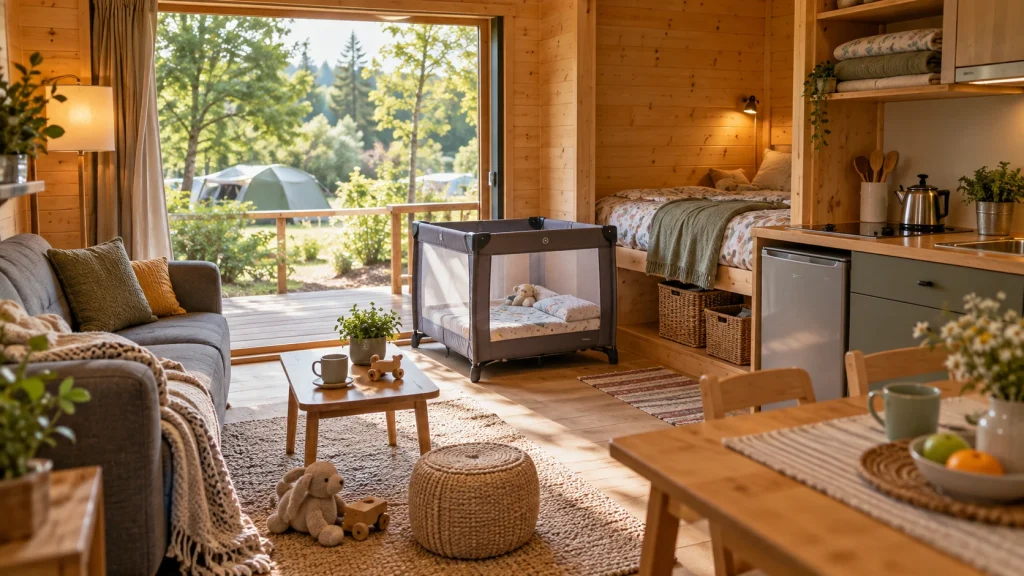
Choosing between cabin accommodation and camping for families with young children often comes down to the small parts of a day: where a toddler naps, how you handle a wet morning, and how much work remains after everyone is tired. Both can make a good family holiday. The better fit depends on your children’s routines, your equipment, and the kind of trip you want.
How much comfort does your family need?
A cabin gives you a ready-made place to return to after a busy day. You can leave some belongings set out, put children down for a rest, and spend less time arranging sleeping space. That can be especially helpful if you are travelling with a baby, managing frequent night waking, or arriving after a long drive.
Cabins differ, though. Before booking, check the sleeping layout, bathroom access, cooking facilities, and what bedding you need to bring. A cabin listing may answer those questions differently from another at the same campsite. If a young child needs an early bedtime, it is also worth considering whether the rest of the family will have somewhere comfortable to sit afterward.
Camping offers a different kind of comfort: more time outdoors and the freedom to arrange your own space. Children can move between the tent and nearby activities, while parents can keep meals and breaks informal. The trade-off is that you must bring and set up the equipment that makes sleeping, changing clothes, and storing supplies manageable. For families new to camping, that work can feel larger at the end of a travel day than it did while packing.
Think through a typical day, not just the nights
The overnight setup matters, but family routines usually reveal the bigger differences. Imagine a child who still naps after lunch. In a cabin, the family may be able to return to a familiar sleeping space while someone prepares food. At a tent pitch, a nap may take more planning if the day is bright, noisy, or warm. Neither arrangement guarantees sleep; the useful question is which one gives your child the best chance to settle.
Meals deserve the same attention. With a cabin, check whether you can prepare food inside and what equipment is provided. When camping, find out whether there is a guest kitchen and how far it is from your pitch. At the campsite, camping guests have access to a guest kitchen with ovens, as well as laundry facilities. Bringing simple meals and familiar snacks can still save effort whichever accommodation you choose.
Bathroom trips can also shape the day. The campsite has sanitary buildings with toilets and showers, including changing rooms. If you choose a camping pitch, consider the walk to these facilities with a child who needs help or may wake during the night. For a cabin, check the specific unit’s bathroom arrangements rather than assuming that every cabin has its own facilities.
Weather, luggage, and the work of setting up
Camping can be appealing when the forecast suits outdoor living and the family enjoys spending much of the day outside. It also asks you to plan for damp clothes, muddy shoes, and a place to keep sleeping gear dry. A cabin may make those practical tasks easier, particularly on a short trip when setting up and taking down a tent would use a noticeable share of your holiday.
Consider a family arriving with two young children after a full day at a local attraction. If the children are tired and rain is expected, a cabin may reduce the amount of work between arrival and bedtime. If the family already has well-tested camping equipment and several days to settle in, a pitch may feel just as practical. The difference lies partly in how much preparation the adults have already done.
Pack for the arrangement you actually book. For a cabin, confirm what is included before deciding which linens, towels, cooking items, and child essentials to bring. For camping, make a packing list around sleep, meals, weather, and hygiene, then check that essential items will be easy to reach on arrival. A dry change of clothes and bedtime supplies are more useful near the top of the bag than buried beneath the tent equipment.
Compare the full cost and the arrival details
A camping pitch and a cabin have different price structures, so compare the total cost of your stay rather than the headline rate alone. Check what is included for the dates you want, including any electricity, bedding, or other items your family needs. Camping may require an initial investment in equipment; a cabin may be simpler for an occasional trip if you do not already own suitable gear.
Booking details matter as much as price when children are travelling. The campsite offers camping and cabin accommodation, and it has a self-check-in machine for camping arrivals outside reception hours. Cabin guests receive information about where to find their key. Read the instructions for your particular booking before setting off, especially if you expect to arrive in the evening. If you are hoping to stay close to another family, ask about pitch arrangements, but avoid building the trip around a particular pitch number being available.
For more detailed information on this topic, read our guide on How CEE Connections Deliver Safe Power to Caravans.
Let the holiday you want guide the choice
Both options can put families near shared campsite activities. At the campsite, guests can enjoy the beach and playground activities, with a local attraction nearby. Those features may matter more to your children than whether they sleep in a cabin or a tent.
Choose a cabin when easy arrival, a simpler bedtime routine, or less equipment would make the trip more enjoyable. Choose camping when your family likes outdoor living and is comfortable handling setup and changing weather. If you are unsure, look at your youngest child’s needs and the adults’ energy after a typical day out. The accommodation that makes that ordinary evening easier is often the right starting point.